

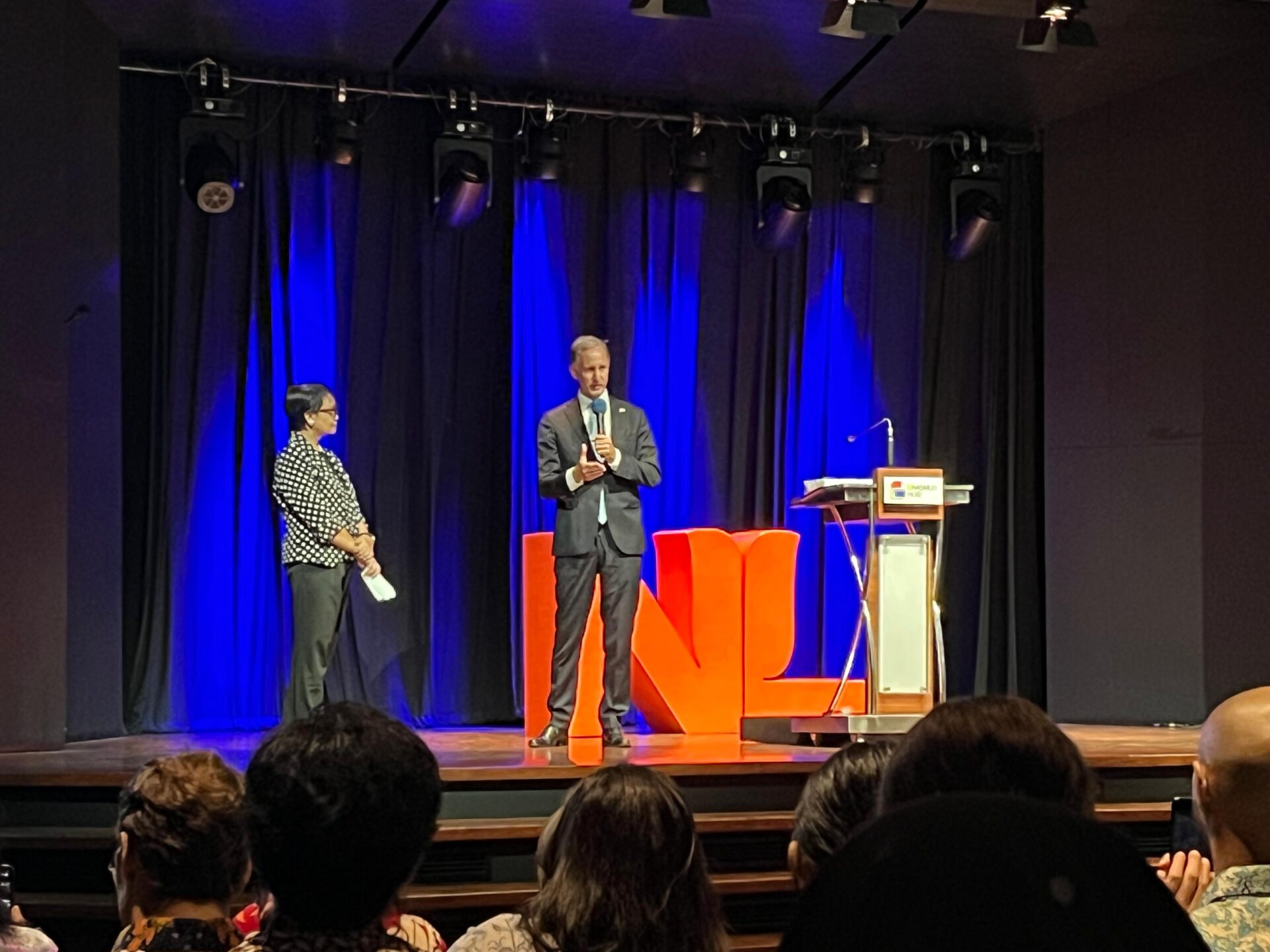
Green Batik Pekalongan joined the Water Impact Week Festival at Erasmushuis, Dutch Embassy in Indonesia, Jakarta, on 4 May 2026, bringing the story of batik and water from Pekalongan to a wider audience.
The festival marked 25 years of water collaboration between Indonesia and the Netherlands, gathering global leaders, policy experts, companies, and practitioners working toward a more water-resilient future. The event featured a keynote speech by Retno Marsudi, United Nations Special Envoy on Water, followed by a talkshow and expo highlighting water governance, climate adaptation, innovation, and sustainability.
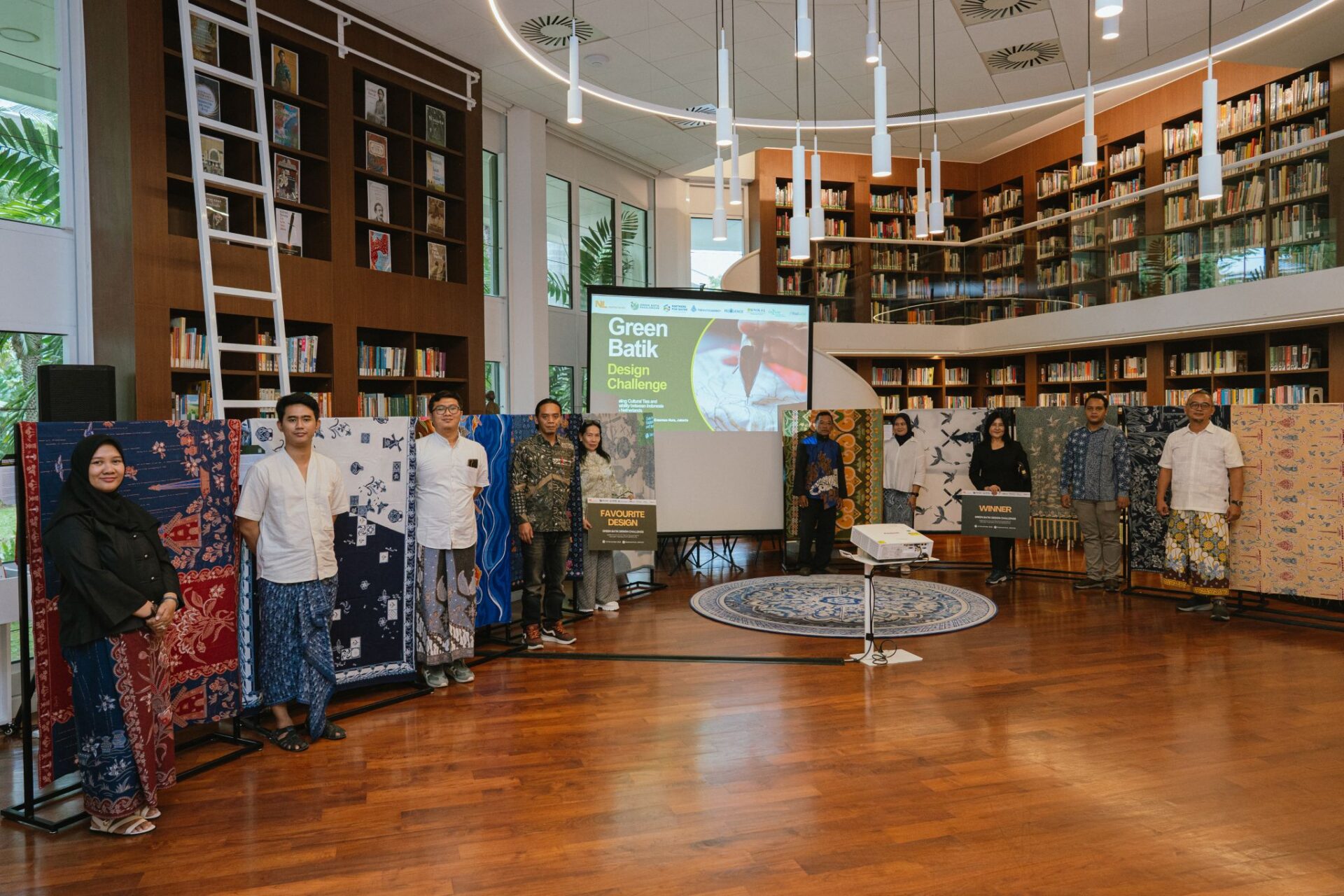
As part of the event, Green Batik Pekalongan showcased selected batik works that reflected the connection between culture, water, and environmental responsibility. The Top 3 batik works and 1 Favorite Award from the Green Batik Design Challenge were presented directly to Ibu Retno Marsudi, while the other 6 batik works were displayed in the auditorium for event participants to view.
During the showcase, Green Batik Pekalongan had the pleasure of sharing this story with Ibu Retno Marsudi. With her strong appreciation for batik, she quickly noticed the subtle traces left between the strokes, where hot wax, or malam, had once shaped the pattern. Her observation led to a simple but important question: “how much water is needed to produce one piece of batik?”
The answer is around 100 litres, if not more. Most of this water comes from groundwater, as many rivers are already too polluted due to untreated batik wastewater and other sources of pollution. This means batik production is not only connected to culture and livelihoods, but also to groundwater use, river health, and the long-term resilience of Pekalongan.
Through Green Batik Pekalongan, the team is working to make batik production more sustainable, both now and for future generations. The initiative aims to treat 100% of batik wastewater, reduce water consumption by 70%, and reduce groundwater use by 80%.
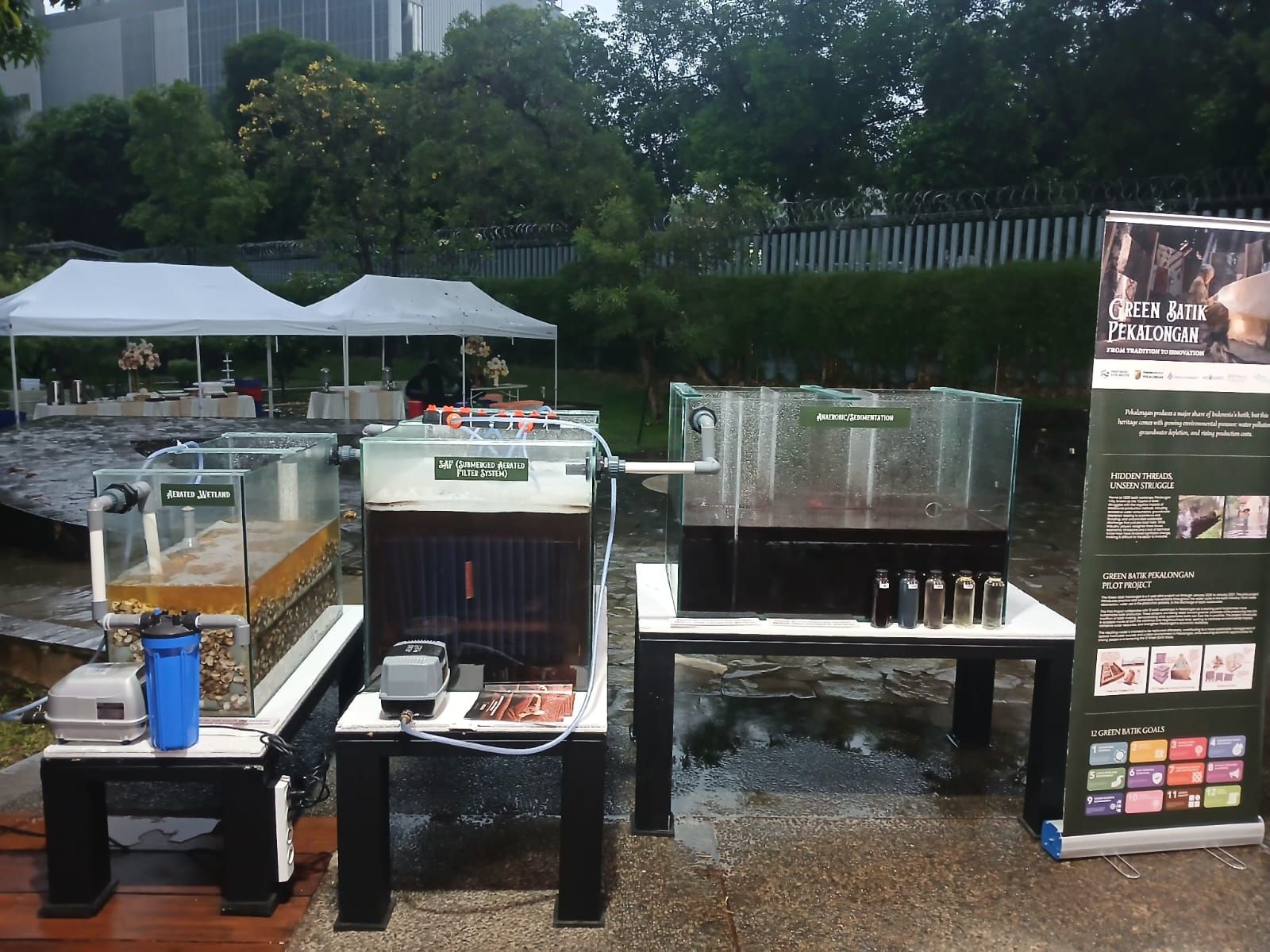
In the first half of the pilot, Green Batik Pekalongan has developed and tested household-level wastewater treatment systems that combine simple biological processes with nature-based solutions, including wetlands. These systems have produced treated wastewater that meets safe discharge standards.
Today, more than 50% of treated water can be reused. When combined with rainwater harvesting, groundwater use can be reduced from around 100 litres to about 20 litres per piece of batik.
The batik showcase helped bring this message to life in a simple and visual way. It showed that behind every beautiful batik pattern, there is also a water story: where the water comes from, where it goes, and how production can become cleaner without losing its cultural value.