

Green Batik Pekalongan held an SIH (Green Industry Certification) training for the batik workshops on 8 and 10 October 2025. The training was organized with support from the Department of Industry and Manpower of Pekalongan City Government, and attended by 31 batik owners, including the current Green Batik Champions: Batik Encim Rininta, Batik Rameza, and Batik Metaflora.

The training was opened by Mrs. Hj. Balgis Diab, S.Ag., S.E., M.M., Deputy Mayor of Pekalongan; Betty Dahfiany Dahlan, S.T., Head of the Department of Industry and Manpower of Pekalongan City; Maghfiroh, S.Si., M.T. from Universitas Pekalongan, and Carrina Lim from The Water Agency, as part of Green Batik Pekalongan. One of the main messages from the opening session was that SIH certification can help protect the batik industry. When flooding happens, certified batik industries can show that batik producers are taking responsibility and should not be easily blamed as part of the problem.
The first session was delivered by Carrina Lim from The Water Agency, as part of Green Batik Pekalongan. She connected the training with the project’s wider vision: supporting Pekalongan’s batik sector to reduce environmental impact and build a more resilient local industry.

The session continued with Maghfiroh, S.Si., M.T. from Universitas Pekalongan, also part of Green Batik Pekalongan. As a batik expert, she introduced why SIH matters for batik producers and connected the standard with the real stages of batik making, from fabric preparation and wax application to colouring, wax removal, and finishing.

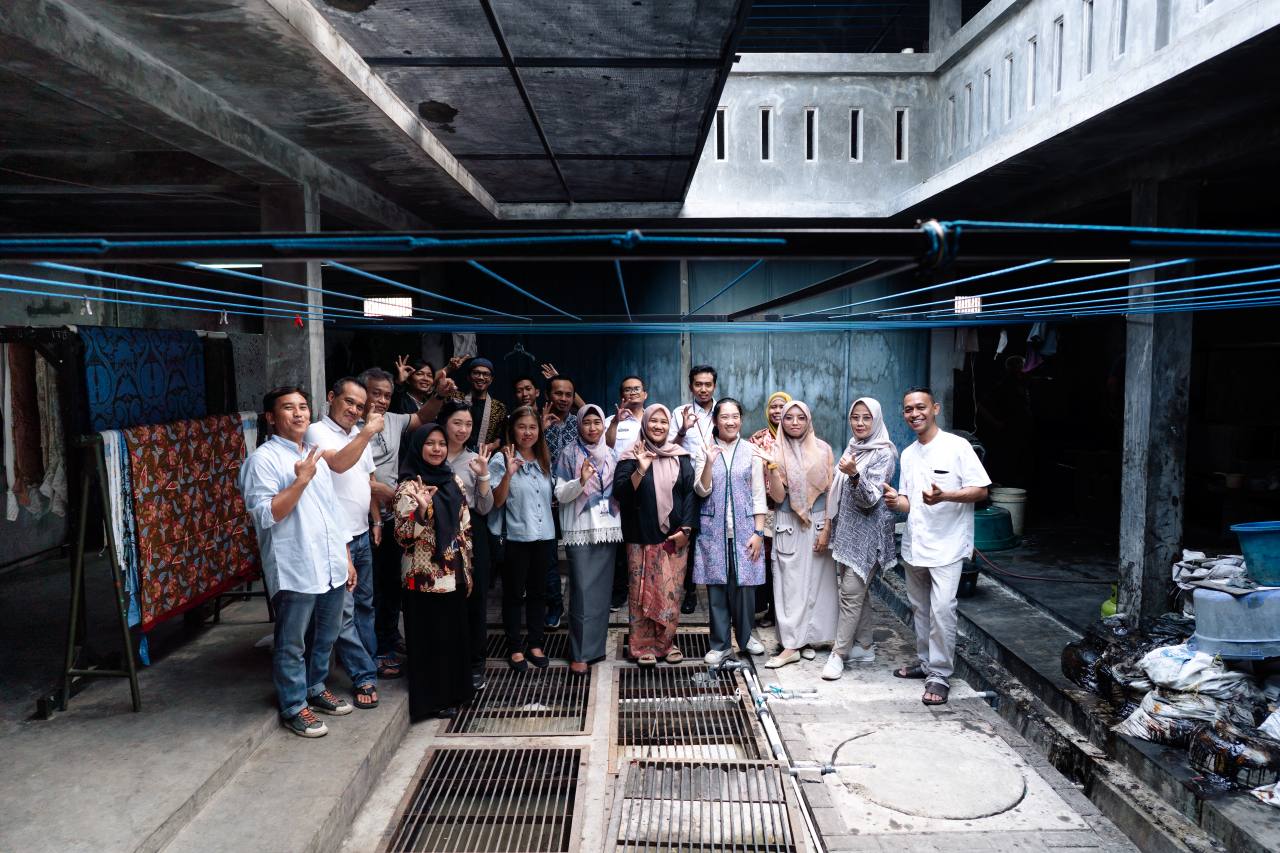
After the Day 1 sessions, participants were invited to visit Batik Encim Rininta’s workshop to see its wastewater treatment facility (IPAL) and understand how it works in practice. The visit gave batik owners a clearer picture of how wastewater management can be applied in a real workshop setting. During the visit, participants discussed directly with Ibu Rininta and the Green Batik Pekalongan team, showing strong attention and interest from the participants.
The two main technical sessions were led by Juwarso, ST, an official and expert from the Center for Standardization and Industrial Services for Handicrafts and Batik Yogyakarta, under the Ministry of Industry. He explained the two major parts of SIH certification: management aspects and technical aspects. On the management side, participants learned about the need for written policies, clear organizational roles, strategic planning, implementation records, monitoring, management review, and social responsibility. On the technical side, he explained what batik workshops need to measure and monitor raw materials, supporting materials, wax use and recycling, energy, water consumption, products, packaging, and waste.

Throughout the training, the batik owners showed strong interest and actively discussed practical issues. For many participants, the training became a first step toward seeing sustainability in a more structured and measurable way.